How much does a small business website cost in Australia?
A small business website in Australia costs from a few hundred dollars a year to $10,000 or more. What drives the price, the running costs and how to budget.
By the Omniwink team · 12 October 2026 · 9 min read
Listen to the summary· 1 min
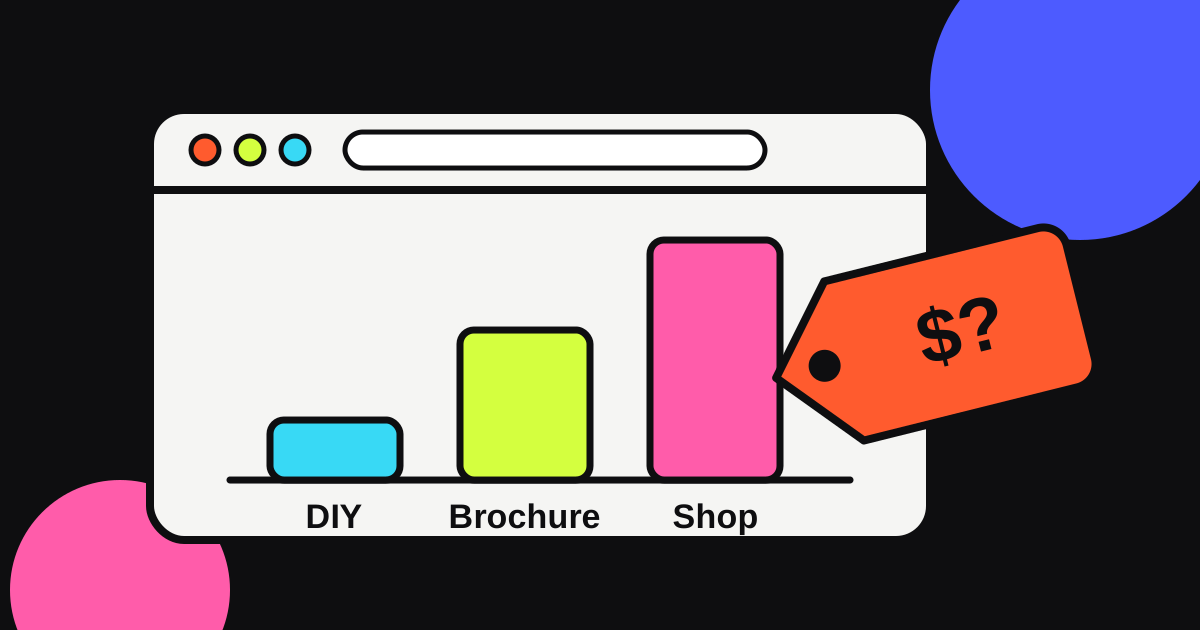
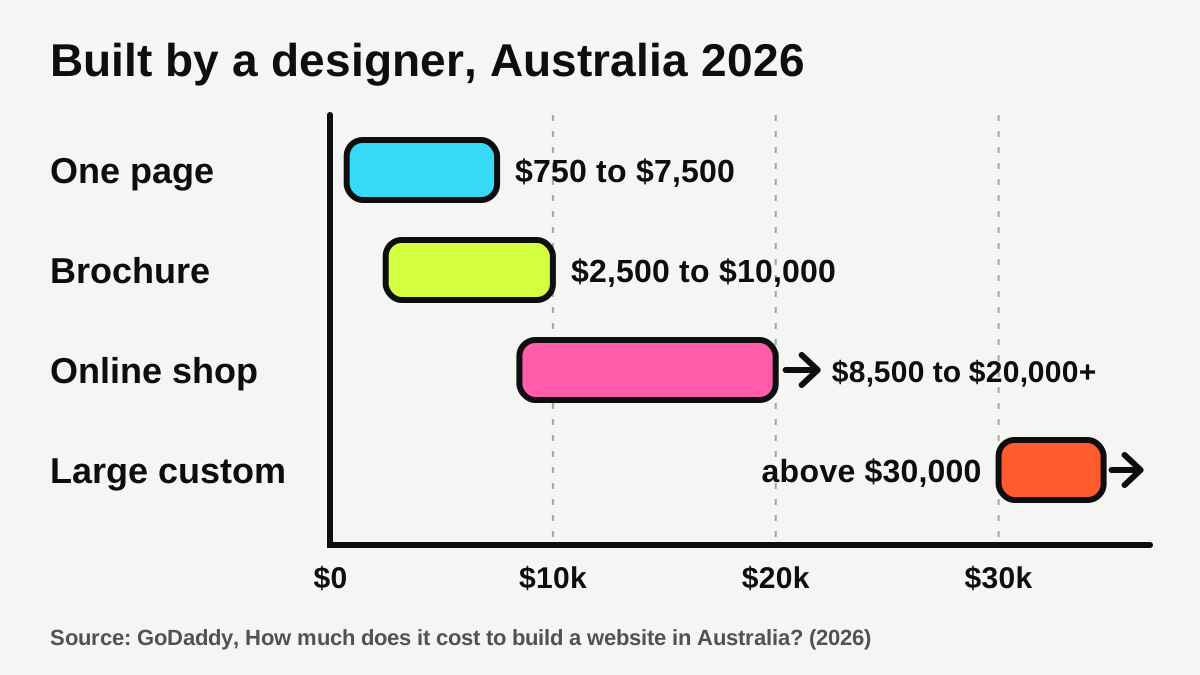
A small business website in Australia can cost anywhere from about $15 a month for a do-it-yourself builder to $10,000 or more for a site built by a web designer. Australian pricing published in 2026 puts a designer-built brochure website at $2,500 to $10,000, a small to medium online shop at $8,500 to $20,000 or more, and large custom sites above $30,000 [1].
The price depends less on "how many pages" and more on what the site has to do for your business: show up in Google, take bookings, sell online, and make the phone ring. Then there are the running costs that keep it working after launch.
This guide breaks down where the money goes, what you'll pay every year, and how to work out a sensible budget for your business.
What are you actually paying for?
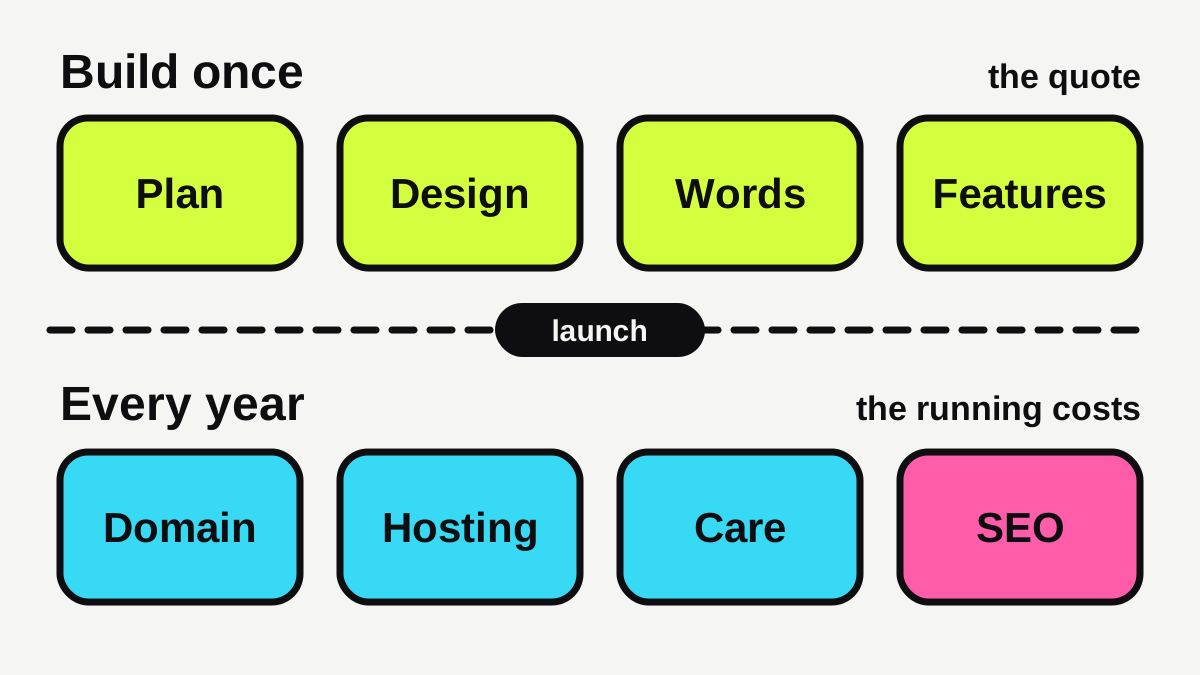
Every business website, whether you build it yourself or hire someone, is made of the same few parts. The Australian Government's business site lists the essentials: a domain name, hosting to store the site on a server connected to the internet, and a content management system (CMS) to publish and update it [2]. On top of those sit the things that cost the most: planning, design, writing and any special features.
The one-off build
This is the big number on a quote. It covers working out what pages you need, designing them, writing the words, building the site and testing it on phones. A good website, in the government's words, makes you look more professional, makes it easy for customers to find and contact you, and promotes your products or services [2]. Every one of those takes planning, not just a template.
The running costs
These continue for as long as the site is online: the domain, hosting, software subscriptions, updates and backups. A cloud-based CMS (the kind most website builders use) is a paid subscription [2], so even a "free" site usually has a monthly cost somewhere.
How much do the main options cost?
Here's how the common routes compare, using Australian figures published in 2026 [1].
| Option | Typical cost | Best for |
|---|---|---|
| DIY website builder | About $15 to $23 a month on an annual plan, hosting and domain included | A simple site you'll write and update yourself |
| One-page website by a designer | $750 to $7,500 | A single landing page for one service |
| Brochure website by a designer | $2,500 to $10,000 | Most service businesses: tradies, clinics, salons, professional services |
| Small to medium online shop | $8,500 to $20,000 or more | Selling products online |
| Large custom website | Above $30,000 | Complex features, integrations or large catalogues |
Designers charge very different rates. The same guide lists brochure-site work at $20 to $64 or more an hour, and online shop or custom work at $50 to $250 or more an hour [1]. That spread is one reason two quotes for "the same" website can be thousands of dollars apart.
What makes one website cost more than another?
If you're comparing quotes, these are the things that move the price.
The number of pages you really need
Each service you want to be found for usually deserves its own page, and so does each area you want to rank in. A plumber who wants to show up for "blocked drains", "hot water" and "gas fitting" across several suburbs needs more pages than a single "services" page can cover. The government's checklist of typical pages includes an about page, contact details, service descriptions, a blog, customer reviews, FAQs and terms and conditions [2]. Our guide to what pages a tradie website needs walks through each one, and our page for plumbers shows how that plays out for a trade.
Who writes the words
Copy is often the hidden cost. Some quotes include writing; others expect you to supply every word. If you're busy on the tools, paying for the writing is usually what gets the site finished.
Features
Online booking, quote request forms, an online shop or a members area all add build and testing time. A shop is the biggest jump, which is why online stores sit in a higher price band than brochure sites [1].
Mobile performance
Most of your visitors will be on a phone, and Google uses the mobile version of a site's content for indexing and ranking [4]. Speed matters too. Google's research found that bounced mobile sessions loaded about 2.5 seconds slower than sessions where people stayed [5]. A site that's built properly for phones costs a little more upfront and loses fewer customers.
Accessibility
A well-built site works for people using screen readers or keyboards, with readable contrast and labelled forms. The international standard for this is the Web Content Accessibility Guidelines, with WCAG 2.1 and 2.2 the current versions [7]. Ask any designer you're considering whether they build to it.
Should you use a website builder or hire a designer?
This is the first real decision, and it's mostly about your time and what the site has to do. For a fuller comparison, see our guide to website builder or web designer: which should you choose.
When a builder makes sense
A builder is the cheapest way to get online, and the monthly plan usually bundles hosting, a domain and the software [1]. It suits you if:
- you're just starting out and want a simple presence while you test the business;
- you enjoy writing and have a few hours a month to keep pages up to date;
- most of your work comes from referrals, so the site mainly confirms you're real.
The catch is that the builder gives you tools, not a plan. Working out which pages you need, what to say on them and how to get them found is still your job.
When a designer makes sense
Paying a professional costs more upfront [1] but buys you their time and experience. It usually pays off when:
- you want the site to bring in new enquiries, not just confirm you exist;
- you need to show up in Google for several services or suburbs;
- you need bookings, quote forms, payments or an online shop that has to work first time;
- your time is better spent on paying work than learning a website builder.
The middle path
Some businesses start on a builder and move to a designed site once the work is steady. That's a sensible plan, as long as you keep the domain in your own name from day one [3] so you can take it with you.
Costs people forget to budget for
Quotes tend to focus on the build. These are the extra costs that catch people out later.
- Photos. Stock photos look generic, and good photos of your own team, work and premises sell better. A half-day shoot is often worth it.
- Your own time. Even with a designer doing the work, someone has to supply the details, check the drafts and answer questions.
- Changes after launch. Ask how small edits are charged. Some providers include a few each month; others bill by the hour.
- Renewals. The domain, hosting and any paid plugins or apps renew every year, often at a higher rate than the first-year deal.
- Moving later. If a provider holds your domain or builds on a system you can't take with you, leaving can mean paying for a new site.
None of these are reasons not to get a website. They're reasons to ask about them before you sign, so the real cost is clear from the start.
What does a website cost to run each year?
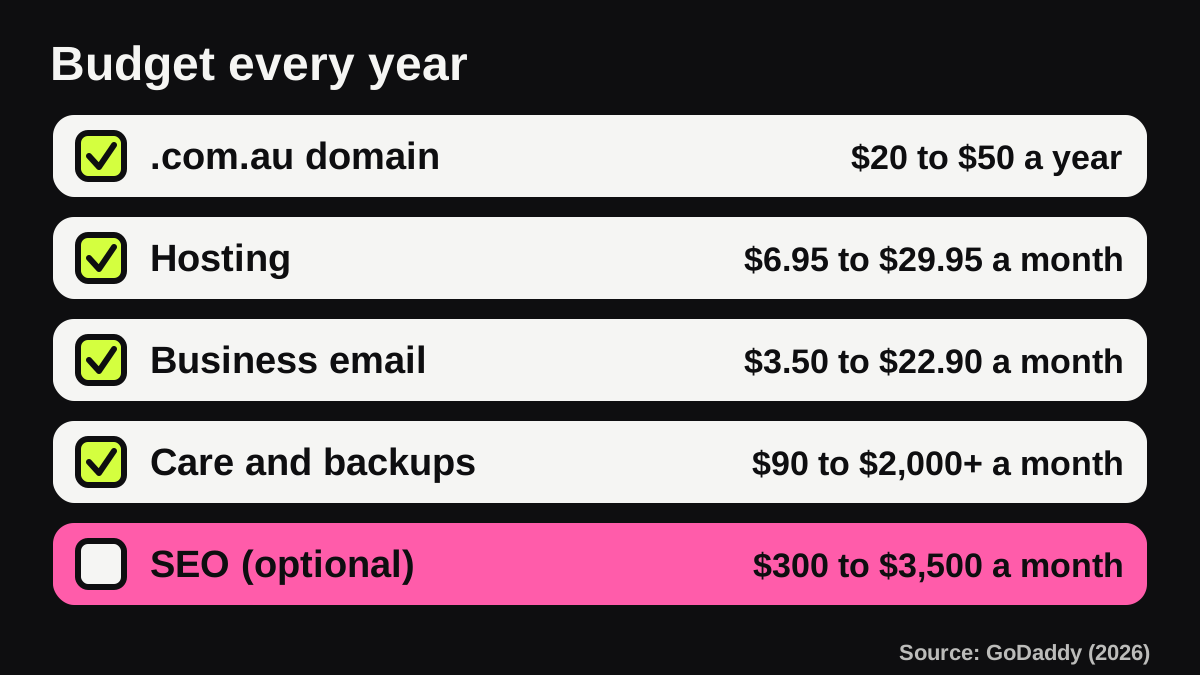
Budget for these after launch [1]:
- Domain name: about $20 to $50 a year for a .com.au.
- Hosting: about $7 to $30 a month for a brochure site; more for online shops.
- Business email: about $3.50 to $23 a month per person.
- Maintenance: retainers from about $90 to $2,000 or more a month, depending on how much is included.
- SEO (search optimisation): typically $300 to $3,500 a month if you pay someone to grow your rankings.
A .com.au domain is a licence, not something you own outright. You can register it for one to five years at a time and renew it while you still qualify, usually through an active ABN or ACN [3]. Make sure the licence is in your business's name, not your web designer's.
So what should a small business budget?
There's no single right number, but you can work it out from what the site has to do. Australia has about 2.7 million small businesses [6], and most of them are competing with the business down the road on Google, not with national brands. That shapes the budget:
- If the site just needs to exist: a DIY builder or one-page site is fine. Expect a few hundred dollars a year plus your own time.
- If the site needs to bring in enquiries: budget for a designer-built brochure site in the $2,500 to $10,000 range [1], with pages for each main service and the words written for search.
- If you sell online: start from the online shop range and add the cost of product photos and descriptions.
Then add the running costs above for at least the first year.
For an exact figure for your own business, our free website cost calculator prices it from your pages and features, using our published prices. It won't replace a quote, but it shows you where the money goes before you talk to anyone.
How to get a fair quote
Before you sign anything:
- Write down what the site has to do. "Get more calls for hot water jobs in the western suburbs" is more useful to a designer than "a modern website".
- List your pages. One per main service, plus about, contact and reviews. A free website blueprint does this for you.
- Get two or three quotes for the same brief, so you're comparing like with like.
- Ask what's included: copywriting, mobile testing, contact forms, search setup, rounds of changes, and training to update it yourself.
- Ask about ownership: the domain, the logins and the content should be yours.
- Ask about running costs for the first year, in writing.
If you'd like to see how a fixed-price option compares, our website packages list what's in each one and what it costs.
What to do next
A website is worth what it brings in, not what it costs. Before you spend anything, check how your business shows up online today. A free visibility scan shows how you look on Google and social media, and what to fix first, in about a minute.
Ready for a website that brings in work?
Fixed prices, a private preview, and the balance only when you're happy.
Sources
- [1]How much does it cost to build a website in Australia? · GoDaddy · accessed 12 October 2026
- [2]Set up a business website · business.gov.au (Australian Government) · accessed 12 October 2026
- [3]com.au domain names · .au Domain Administration Ltd (auDA) · accessed 12 October 2026
- [4]Mobile site and mobile-first indexing best practices · Google Search Central · accessed 12 October 2026
- [5]Why marketers should care about mobile page speed · Think with Google · accessed 12 October 2026
- [6]Small business population and key issues · Australian Small Business and Family Enterprise Ombudsman · accessed 12 October 2026
- [7]WCAG 2 Overview · W3C Web Accessibility Initiative · accessed 12 October 2026